
Captain Cook's Voyages | The publishing phenomenon
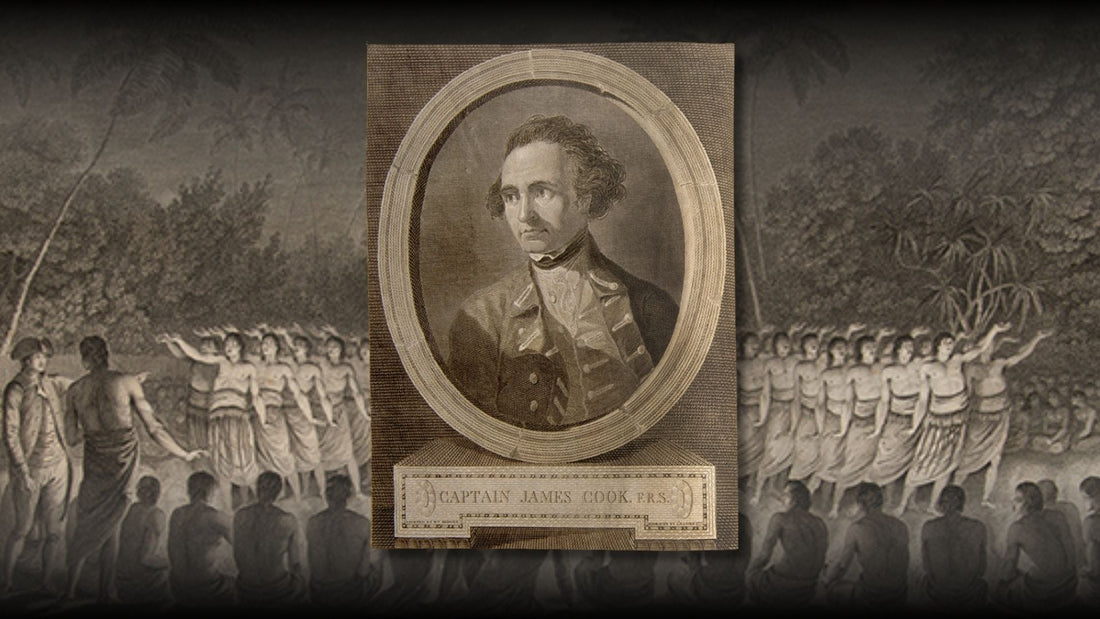
The publishing phenomenon around Captain Cook's Voyages


Captain James COOK. [A Complete Set of the Three Voyages to the Pacific Ocean]. London, 1773; 1777; 1784
In the 18th century, before the days of the modern celebrity biography, it was Cook and the accounts of his voyages which sold out to a frenzied public clamouring for detail. The account of his third and final voyage was so popular that all copies of the official account sold out within three days and instantly commanded huge sums on the secondary market. Our set of all three voyages can still be found in its contemporary binding, complete with the atlas.

[David HENRY (editor)]. An Historical Account of all the Voyages Round the World. London, 1773–1774
The delay between the arrival of news of Cook’s ground-breaking voyages and the publication of the official accounts, often more than 18 months, contributed to the public fervour. So long were the delays, in fact, that other authors sought to beat the official account to the press and reap unscrupulous profits. Hawkesworth, the official author of the first voyage, fought tooth and nail to prevent illicit accounts appearing, even issuing a government injunction to that effect. This did not stop David Henry publishing his collected voyages just months after the official account. By including earlier circumnavigators he differentiated his work sufficiently whilst still being able to take advantage of the craze for Cook.

John MARRA. Journal of the Resolution's Voyage, in 1772, 1773, 1774, and 1775. On discovery to the southern hemisphere,.... London, 1775
By the time news of Cook’s second voyage reached England’s shores, interest had reached fever pitch. Cook took two years to finalise the official account of the voyage, enabling other authors to publish their own versions. John Marra anonymously penned the first published account of the second voyage in 1775, aided by his friend David Henry. He included many incidents omitted by Cook, such as the dispute with the naturalist Joseph Banks, who refused to travel on the Resolution and was replaced by the Forsters, as well as the deaths of 10 crewmen at the hands of the Māori.

Johann Reinhold FORSTER. Observations made during a Voyage round the World. London, 1778
Johann Forster, the official naturalist of the Second Voyage, had originally been promised the role of official author; however, Cook, seeing the rewards of writing it himself, insisted on sole authorship. Under the weight of editorial disagreements, Forster was eventually forced to publish his scientific account of the second voyage separately. While the book was well reviewed, its success was torpedoed by William Wales, the astronomer on the Second Voyage, who published a scathing rebuke of Forster’s account of events.

William WALES. Remarks on Mr. Forster's Account of Captain Cook's Last Voyage round the World. London, 1778


